HISTORY
PRESTON BASEBALL CLUB 115 YEARS
1910-2025
1910–1919 Years: Foundation and the First Test
Preston 1910
Source State Library of Victoria
1910 Foundation Year
Preston Baseball Club is founded by members of the Preston Cricket Club and enters the Victorian Baseball League in B Grade. The Club’s first recorded team takes the field, marking the beginning of organised baseball in Preston.
First Preston Baseball Team Winter 1910
Key members of this historic first team by fielding positions: Will Blendell (1), Neil Gillies (2), Harry Westmoreland (3), Geo Sykes (4), William “Wally” Fyfe (5), Will Newbound (6), Percy Howes (7), Ed Nankervis (8), Alf Wilson (9).
Leadership & Foundations
Colonel William Braithwaite is appointed the Club’s Founding President, serving until 1922. During these formative years, William “Wally” Fyfe holds the role of Secretary and Treasurer of both the Preston Cricket and Baseball Clubs, reflecting the strong connection between the two sporting clubs in Preston.
Early Playing Years at Preston City Oval
Baseball is played as a winter sport, often prior to Victorian Football Association matches on shared grounds. Preston’s home games were held at what is now Preston City Oval currently home of the Preston Bullants , near the Preston City Council Chambers on High Street.
1914
The Club competes in C Grade and joins forces with the Preston Scout Baseball Team. The outbreak of the First World War has a profound impact on community sport across Australia.
1915
Victorian baseball undergoes significant change with the formation of the Victorian Baseball Union. Preston remains aligned with the Victorian Baseball League, playing matches on Victorian Football League grounds including Williamstown, Prahran, Northcote, Brunswick, Essendon and North Melbourne.
Wartime Years 1914–1918
Despite reduced participation and the challenges of war, baseball competition continues in a limited form, sustaining the Club through difficult years.
The First World War comes to an end. Captain William McCarthy Braithwaite (AIF), son of the Club’s Founding President, is killed in action on 3 October 1918, 34 days before Armistice Day on 11 November 1918.
Legacy
In 1922, Colonel William Braithwaite dies in London while visiting his son’s grave, closing a significant chapter in the Club’s early history.
1920–1929 Years: Consolidation and Community
A New Era for Victorian Baseball
Preston Proclamation Arch 1926
Source Courtesy of Darebin Libraries
The 1920s mark a period of consolidation and growth for baseball in Victoria, mirrored by increasing stability and success at Preston.
1925
The Victorian Baseball Association is formed with 24 clubs, forty-eight teams and 600 players across five sections. This united the Victorian Baseball League (est. 1890), the Victorian Baseball Union (est. 1915) and the Victorian Baseball Council (est. 1922). This milestone brings a single governing body to the sport in Victoria.
1926
Sixteen years after its establishment, Preston Baseball Club secures its first premiership, winning the E Grade title a defining achievement in the Club’s early history.
Preston was proclaimed as a City and a special archway was erected at the southern entrance to the city on High Street.
Percy Howes
Refurbished for 115th Anniversary
1929
The Club awards its first Life Membership to Percy Howes. A member of Preston’s inaugural 1910 team, Howes served as Secretary/Treasurer from 1925 to 1928.
Club Leadership & Community
Cr John Bartrop, the Club’s second President (1923–1929), also served as Mayor of Preston in 1923–24. A local businessman, he established a grocery enterprise on High Street Preston, later expanding to Bell Street, reflecting the Club’s deep roots in the local community.
1930–1939 Years: The Formative Decade
Leadership and Administration
Percy Howes commenced his tenure as President of the Preston Baseball Club, beginning what would become a remarkable 23-year term from 1930 to 1953, making him the Club’s longest-serving President. Jack Goller also began his long service to the Club, taking on the role of Secretary/Treasurer from 1930 to 1946, ensuring the administrative foundations of the Club were firmly established.
1930s Expansion of Regional Baseball
The 1930s were pivotal for baseball in Victoria, with the formation of the Ballarat Baseball Association in 1930, the Dandenong Baseball Association (DBA) in 1931, the Bendigo Baseball Association in 1934 and the Geelong and Gippsland Baseball Association formed in 1937.
1932 On-Field Success
Preston claimed its first D Grade Pennant, defeating Murrumbeena 14–7 in the premiership decider. Contemporary reports noted: “The winners’ batting was good, but Murrumbeena helped by making a string of errors.” – The Argus, 26 September 1932.
This marked the beginning of a successful era, with Preston later winning Metro C Premierships in 1934 and 1937.
D Grade Premiers 1932
1932 Inter-Regional Competition
Over the King’s Birthday weekend, Ballarat hosted teams from Dandenong, Fitzroy, Northcote, and Preston Churches Association, laying the foundations for what would become the Victorian Provincial Baseball League.
1934 The Birth of the Claxton Shield
The inaugural Claxton Shield Competition was held in Adelaide, featuring Victoria, South Australia, and New South Wales. South Australia claimed the first title, marking the beginning of an enduring national competition.
Club Identity and Uniform
From the earliest years, Preston players were distinguished by red and white colours, evident in photographs showing white cricket-style tops with a prominently sewn “P”. These early uniforms became a recognizable symbol of the Club and its growing presence in Victorian baseball.
1939
The outbreak of the second World War.
1940–1949 Years: War, Sacrifice and Renewal
The War Years
The outbreak of the Second World War brought significant disruption to Victorian baseball. Many clubs were forced to suspend operations as hundreds of players enlisted in the armed forces. Competitions were reduced, travel was restricted, and resources were scarce.
Despite these challenges, the sport endured. Baseball continued in a limited capacity throughout the war years and, following the cessation of hostilities in 1945, experienced a strong resurgence. This post-war revival fostered renewed growth, increased state representation, and the continued prominence of competitions such as the Claxton Shield.
1943 Arthur Westcott
Born in 1911, just one year after the formation of the Preston Baseball Club, Arthur Westcott became one of the Club’s most respected figures of the 1930s, serving as both a popular pitcher and team captain. Westcott enlisted in the Royal Australian Air Force in October 1942. Tragically, on 12 May 1943, he was killed during a training exercise off Seaspray, Victoria.
The Westcott Legacy
In his memory, the Westcott family struck a perpetual trophy to honour the Club’s Best First Player, ensuring Arthur Westcott’s legacy would remain permanently entwined with the Club.
The inaugural Arthur Westcott Memorial Trophy (Best First Player / Club Champion) was awarded in 1943 to Tom Proctor, the same year Preston were C Section Premiers.
Significant Artefacts
Arthur Westcott Memorial Trophy Medal, awarded to Tom Proctor by the Preston Baseball Club, 1943.
Donated by Tom Proctor to the Australian Gallery of Sport and Olympic Museum (Collection No. N2016.46).
Preston Baseball Club Cap, worn by Tom Proctor.
Donated by Tom Proctor to the Australian Gallery of Sport and Olympic Museum (Collection No. 2006.4395).
1945 End of the Second World War
The conclusion of the war marked a turning point for the Club and the sport more broadly. Arthur Curwood claimed the first of his remarkable seven Arthur Westcott Club Champion trophy, achieved between 1945 and 1955, cementing his place as one of the Club’s most dominant post-war players.
The Post-War Years
With peace restored, the Preston Baseball Club entered a period of renewed success. The Club captured two further premierships during the latter half of the decade, B2 Major League Premiers (1947) and B Reserves Premiers (1948).
These achievements reflected both the resilience of the Club during wartime and its capacity to rebuild, thrive, and honour the legacy of those who served.
1950–1959 Years: Stability and a Club Comes of Age
A Defining Figure Colin Miller
1957 D Grade Premiers
A pivotal moment in the Club’s history occurred in 1956, when Colin Miller transferred from the Melbourne Baseball Club, beginning what would become an extraordinary fifty-year association with the Club. Miller quickly emerged as a central figure on and off the field.
He became Captain and Coach in 1958, guiding the Club during one of its most successful competitive periods. His service extended well beyond playing and coaching roles, later serving as Treasurer (1960–1962) and President (1963–1976). In recognition of his contribution, Colin Miller was awarded Life Membership of the Preston Baseball Club in 1968.
1956 Melbourne Olympic Games
Although baseball was not included as an official sport at the 1956 Melbourne Olympic Games, it featured as a demonstration event after Australian officials invited the United States to send a representative team.
The Australian side was drawn largely from amateur ranks, as many Sheffield Shield cricketers who had proven highly capable baseballers during winter were ineligible due to being classified as professional athletes. America won 6 1 in from of a crowd of 114,000 which stood as the highest-attended exhibition baseball game until 2008.
1957 D Grade Premiers
The Decade of Minor Premierships
The 1950s proved to be one of the Club’s most consistent eras of success. Between 1952 and 1958, Preston contested four Minor A1 Premierships, claiming titles in, 1952, 1957 and 1958. The Club also finished runner-up in 1954, underscoring a sustained period of high-level performance.
Home Grounds and Community Impact
During its first fifty years, Club played across several venues, including Crisp Park and Cramer Street Oval (Preston City Oval), located opposite Preston Market.
By the early 1950s, the Club had established itself at Oulton Reserve formerly known as Haxby Park situated on the corner of Bell Street and Albert Street.
The baseball diamond at Oulton Reserve was positioned close to neighbouring houses, particularly along the first-base line. Foul balls frequently cleared the boundary, occasionally crashing onto nearby rooftops. Unsurprisingly, this led to vocal objections from local residents, with complaints raised to council and reported in the local press. Today Oulton Reserve remains the home of the Preston Baseballers Cricket Club.
Ken Bowe Fifty Years of Service
Ken Bowe started with Club in 1957 and gave the Club a remarkable fifty years of service as a player, secretary, President (1977-1980) and passionate advocate. He was a three time winner of the Arthur Westcott Club Champion trophy in 1957, 1958 and 1960. To recognise his long service the Clubs Life Membership was renamed the Ken Bowe Medal in 2004. Ken was awarded Life Membership of the Club in 1965.
1960–1969 Years: A New Home
A New Home at Robinson Reserve
In 1963, the Club relocated to Robinson Reserve, off Goodwin Street beside the Merri Creek. This move marked a turning point in the Club’s off-field development. Robinson Reserve would remain the Club’s home for almost forty years, until 2002, becoming synonymous with Preston baseball for generations of players and supporters.
During the 1960s, the first stage of a brick pavilion was constructed largely through Club labour, using materials supplied by Council.
Robinson Reserve was also notable for its distinctive field dimensions. The diamond featured an unusually short right-field fence of 238 feet, with centre field measuring 389 feet and left field 301 feet, characteristics that became well known to players and visiting teams alike.
A Decade of On-Field Success C Grade to B Grade
C Grade Premiers 1967
The 1960s proved to be a very successful decade in the Club’s history, with Preston consistently competing for and winning premierships across multiple grades. Success was sustained throughout the decade, culminating in multiple Club Championships.
The decade culminated in winning C Grade in 1967, which allowed promotion to B Grade in 1968, finishing runners-up in B Grade in 1969. This remarkable consistency positioned Preston as one of the strongest Clubs in Victorian baseball during the period.
U14 Runners Up 1965
Junior Baseball Development
Junior baseball became an increasingly important part of the Club’s structure during the 1960s. In 1961, Preston fielded its first Under 14 team, laying the foundations for a thriving junior program that would continue to grow throughout the decade and beyond.
Jean Fowler and Club Service
Jean Fowler, married former player Ron Fowler, contributed tirelessly as canteen manager and scorer for both juniors and the First IX. Her son, Graham (“Chooka”), was among the Club’s first Under 14 players in 1961.
Following her early passing in her forties, the Club inaugurated the Jean Fowler Memorial Trophy, awarded annually to the Best Junior club person, preserving her legacy of service and dedication.
1970–1979 Years: B Grade Triumph and Amalgamation
1970 First B Grade Flag
After promotion from C Grade in 1968, the Club secured the B Grade Premiership in 1970, earning promotion to A Grade. Under the guidance of coach Don Deeble, the Club reached the A Grade final for the first time in its 60 year history, laying the groundwork for future top-flight success. The Club would have to wait another 14 years to claim its first A Grade (Division 1) Premiership.
B Grade Premiers 1970
First “Home Grown” Claxton Shield Player
In 1970, John Hodges became the Club’s first “home-grown” player selected for the Claxton Shield, representing Victoria at the national level. Hodges went on to win the Arthur Westcott Club Champion award three times: 1974, 1975, and 1977, cementing his status as one of Preston’s finest players.
John Hodges 1970
Club Identity
By the 1970s, the Club had adopted a red baseball cap, with the iconic “P” still in use today transitioning away from the cricket cap.
Uniform colours remained red and white, with PBC displayed on the left chest. This period also saw the introduction of the first known Club logo, establishing a strong visual identity for players and supporters.
Club Logo Circa 1975
1975 Amalgamation with Collingwood Keon Park Baseball Club
In 1975, the Collingwood Keon Park Baseball Club, evolved from the Collingwood Magpies, amalgamated with the Preston Baseball Club. This merger broadened the Club’s player base and preserved the history and traditions of the Keon Park Magpies.
Keon Park Magpies
Preserving Heritage
The Preston Baseball Club proudly retains the legacy of the Collingwood / Keon Park Magpies, with key historical artefacts on display. Notable items include the Lawrence Nagle Trophy, awarded to the most consistent First Nine player in remembrance of Lawrence Nagle, who was tragically killed in World War II.
1976-1977 Historic Swap from Winter to Summer Sport
The Victorian Baseball Association moved the season from a winter sport to a summer sport for the start of the 1976-1977 season. City Baseball League was formed with six clubs that didn’t want to change to the new summer format, later to be known as Melbourne Winter Baseball League.
1980–1989 Years: First A Grade Premiership
1980 C Grade Premiership
The decade opened with triumph with the Club securing the C Grade Premiership in 1980. The team featured players, including Alex Djorgonoski wo would go onto to be a long serving President of the Club and supporter. The win set the stage for a decade of growth and achievement.
Colin Miller Recognised at State Level
In 1981, Colin Miller was awarded Life Membership of the Victorian Baseball Association, recognising his decades of service and leadership at both the Club and state level.
1984 First A Grade (Division 1) Premiership
Crossing from Coburg in the early 1980s, Chris Straw brought a fresh approach to the Club, steering the team into three A Grade Finals in six seasons. After a 74-year wait, Preston captured its first Division One Premiership in the 1983/84 season, narrowly missing out the following year.
A Grade Premiers 1983/1984
Key members of this historic A Grade squad included:
Troy Hellingman, Richard Vagg (Life Member 1998), Darren Sleeth, Ken Gosstray (Life Member 1988), Martin Legge (Life Member 2021), Rickey Horwood, Jon Deeble (Life Member 1988), Jeff Williams, Barry Skinner, Lindsay Cotchen, Ross Straw, Michael Deeble (Life Member 2011), Billy Linton (Life Member 1998), Graeme Deaney (Life Member 1979), Chris Straw (Life Member 1993), Robert Warton, Wayne Jackson (Absent: Greg Evens).
Jon Deeble: Record Holder and International Representative
Jon Deeble emerged as one of Preston’s most accomplished players, winning the Arthur Westcott Club Champion trophy a record seven consecutive between 1979 and 1986.
He represented Australia at the 1988 Seoul Olympics, managed the national squad at the 2000 Sydney and 2004 Athens Olympics, and coached the Melbourne Aces over multiple seasons. Internationally, Deeble has won seven World Series Rings across the Boston Red Sox, Florida Marlins, and Los Angeles Dodgers organisations. Honours include Baseball Australia Hall of Fame (2026), Life Membership of Baseball Victoria (2024) and Baseball Victoria Hall of Fame (Managers, 2025).
Club Identity
Club Logo 1980’s
By the 1980s, references to the Pirates became a prominent part of the Club’s branding. The imagery was incorporated into uniforms and logos, strengthening the Club’s visual identity and creating a recognisable symbol for players and supporters alike.
1990–1999 Years: Division One Decade
A Golden Era in Division One
Throughout the 1990s, the Preston Baseball Club remained a consistent presence in Division One. This period is widely regarded as the golden decade of the Club’s history, a level of sustained success not replicated before or since.
1991–1992 Season
The decade began under the coaching leadership of Jon Deeble, with four of the Club’s five senior teams qualifying for finals in 1991/1992 a remarkable demonstration of depth and strength across the grades. The Division One side progressed to the Grand Final, ultimately falling to Waverley, confirming Preston’s standing as a powerhouse of the competition at the time.
Division One Premiers 1996/1997 and 1997/1998.
Following the 1991–92 season, Billy Linton assumed the role of senior coach. Under his guidance, Preston achieved an unprecedented feat, securing two consecutive Division One Premierships. Linton remains the only coach in the Club’s history to lead Preston to back-to-back Division One pennants, further cementing the decade as one of exceptional achievement.
Division One Premiers 1996/1997
Key members of this historic Division One squad included:
David Fry, Robert Rattue (Life Member 1989), Billy Linton (Life Member 1998), Laurraine Rattue, Jason Blejwas, Jon Deeble (Life Member 1988), Andrew McKenzie, Dean Rattue, Lucas Van Raalte, Greg Warton, Marshall Skinner (Life Member 1998), Brock Arifovic, David Maloney (Life Member 2009), Alan Fry, Ian Cross (Life Member 2009), Nifty, Chris Mauer, Anthony Bownds, Gene Kingi, Chris Heyward (Life Member 2014), Steve Kingi, Richard Vagg (Life Member 1998), Scott Williams David Hargreaves, Dean Marnell
Division One Premiers 1997/1998
Key members of this historic Division One squad included:
David Fry, Robert Rattue (Life Member 1989), Billy Linton (Life Member 1998), Laurraine Rattue, Ian Cross (Life Member 2009), Lucas Van Raalte, Dean Rattue, Sam Maurer, Paul Heally, Doogle Bensen, Andrew McKenzie, Richard Vagg (Life Member 1998), Jason Blejwas, Dean Marnell, Alan Fry, Nifty, Marshall Skinner (Life Member 1998), Chris Mauer, Scott Williams, Chris Heyward (Life Member 2014), Steve Kingi, Stuart Medland, Brock Arifovic, David Hargreaves
Club Identity
The Pirates branding on uniforms continues to be prominent, with the “P” continuing on the cap to represent Preston and the “Pirates Head” becoming commonly used as off field branding.
2000–2009 Years:
Robinson Reserve: Residents’ Concerns Grow
The continued growth of the Preston Baseball Club following its move to Robinson Reserve in 1963 led to a steady increase in the use of the reserve for both games and training.
The configuration of the baseball diamond meant that fly balls regularly travelled in the direction of nearby homes, particularly along Goodwin Street and Halwyn Street. As a result, concerns from local residents increased over time.
Throughout the 1980s and 1990s, these issues generated a growing number of complaints to Council and the Club, reflecting the challenges of accommodating an expanding sporting club within a residential environment.
These concerns are clearly illustrated in aerial photographs of Robinson Reserve, in which the outline of the baseball diamond remains visible, highlighting its proximity to surrounding houses.
Google Maps
Source Google Maps
Relocation to La Trobe University
In 1998, a three-way agreement was brokered between the Preston Baseball Club, Darebin Council, and La Trobe University to develop a purpose-built baseball facility on university land. The project, valued at $880,000, represented a significant investment in the future of the Club.
The Preston Baseball Club relocated to the new ground and clubrooms for the 2002–03 season, bringing to an end its long association with Preston City Council (later Darebin Council).
La Trobe University Baseball Field 2003- 2021
A New Home and a New Era of Leadership Alex Djorgonoski
In the Club’s first sixty years, Preston was led by just five Presidents. Over the following twenty years, the Club experienced greater turnover, with eight Presidents guiding the organisation through periods of change.
Stability returned in the Club’s second season at La Trobe University (2004/2005) when Alex Djorgonoski commenced his term as President. He would go on to serve with exceptional commitment until the conclusion of the 2020–21 season, becoming the Club’s second longest-serving President, with more than sixteen years in the role.
During his presidency, Djorgonoski steered the Club through the challenges and achievements of competing across Division 1, Division 2, and Division 3, ultimately guiding Preston back to Division 1. His tenure reflected resilience, adaptability, and sustained leadership during one of the most challenging and transformative periods in the Club’s history.
2010–2019 Years: A Century Celebrated
Centenary Celebrations
The decade opened with the celebration of the 100th anniversary of the Preston Baseball Club, marking a century since the Club’s foundation in 1910. At this milestone, the Club was fielding five senior teams and had recently worked its way back into Division Two, following a period in Division Three in the mid 2010s. The Club had developed a thriving T-Ball program and had more than 100 junior players.
The Jon Deeble Junior Rising Star Award
Introduced in the 2007–08 season, the Jon Deeble Junior Rising Star Award recognised outstanding junior players and highlighted pathways beyond local competition.
During this era, opportunities for Preston players to secure college baseball opportunities and scholarships became increasingly accessible. Five recipients of the award went on to play baseball at college level: Nick Djorgonoski (Winner 2007/08), Adrian Fittock (Winner 2009/10), Hamish Foreman (Winner 2014/15), Jarod Belbin (Winner 2016/17), and Jacob Pascuzzi (Winner 2019/20).
Bubbie Buzechero: Energy, Passion, Inspiration - A Club Legend
Across four seasons during the 2010s, the Preston Baseball Club was fortunate to welcome Bubbie Buzechero, whose presence significantly enhanced the Club. A talented import player; he was a teammate, mentor, and ambassador for baseball. Bubbie’s enthusiasm for teaching and spreading the word about baseball inspired many juniors and seniors alike.
Bubbie Buzechero Circa 2011
Following his passing in 2020, the Club introduced the Bubbie Buzechero Club Spirit Award to honour his memory. It is awarded annually to the individual who best exemplifies commitment, passion, and inspiration the very qualities that Bubbie embodied.
Division 2 Premiership and Renewal
Following a challenging period off the field, under the leadership of coach Stuart Meadland, the Club rebuilt its structure and culture to return to Division 2. During this time the Club developed a talented cohort of home-grown junior players who progressed into the Firsts.
This effort culminated in the 2017/2018 season, when Preston captured the Division 2 Premiership under coach Adam Burton, achieving promotion back to Division 1 for a season.
Division 2 Premiers 2017/2018
Key members of this championship-winning squad included: Jessie Collins, Stephen Hunter, Sharon Fittock, Mitch Legge, Nick Djorgonoski, Cameron Deeble, Glenn Farrell, Jarod Belbin, Curtis Cox, Adrian Fittock, Oscar Hargreaves, Hamish Foreman, Yu Teng Chen, Mitch Heyward, Mitch Lay, Adam Burton, Jordan Lay, Hayden Daniel, Tye Wilson, and Satoshi Maekawa.
Many of the players were sons or nephews of Life Members, Presidents, Coaches, and administrators, reflecting the Club’s strong family and community traditions.
2020– Years: A decade of Challenges
The COVID Years
The decade began with the COVID Pandemic. During periods of lockdown (especially in 2020–2021), community baseball training and competitions were prohibited under Victorian health orders no community sport was permitted at various stages. Clubs were unable to conduct training, games, “come and try” days, or other in-person activities. The impact led to, lower participation, financial strain, and new safety protocols.
Redevelopment of La Trobe Sports Precinct
After several years of progressive development around the baseball diamond, the Federal and Victorian Governments announced in late 2020 that the La Trobe Sports Precinct would be comprehensively redeveloped.
As a result, the Club was temporarily displaced for the 2022/2023 season, operating without a permanent home. During this period, Preston established a temporary base at the North Coburg Rebels Baseball Club, ensuring the continuation of senior and junior programs despite the disruption.
Transition to New Leadership
In mid 2021, after 16 years of service as President, Alex Djorgonoski stepped down from the role, concluding one of the longest and most influential presidential tenures in the Club’s history. Leadership transitioned to Myles Foreman, who had recently completed eight years on the Baseball Victoria Board, including six years as President. This period also saw the departure of several long-serving Board members, resulting in a refreshed Board tasked with guiding the Club through redevelopment, relocation, and the challenges of a new decade.
New Branding Adopted 2022
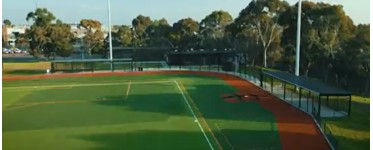
Ganbu Djila Sports Park
Ganbu Djila, derived from the Woiwurrung language meaning “one play”, is a landmark multi-purpose sporting facility and the first of its kind in Victoria. The park features an all-synthetic playing surface capable of being programmed for football (soccer), baseball, and general sporting or recreational activities.
Ganbu Djila Sports Park
Alan Sutherland Recognised at State Level
In 2024, Alan Sutherland became the third Preston Pirate to be awarded Life Membership of the Victorian Baseball Association, recognising his decades of service and leadership at both the Club and state level.
First Women’s League Premiership
Under the leadership of Coach Kirsty Fairservice in the 2025/2026 Season the Club won its first Women’s League Premiership.
Women’s Regional League Premiers 2024/2025
Key members of this championship-winning squad included: Zoe Griffiths, Coco Maddison, Cara Wilkins,Ann Marie O'Brien, Stephanine Scane, Zoe Dean, Danielle Powell, Matt Murray, Simon Foster, Kirsty Fairservice, Julie Goertz, Ashlyn Allen, Alicia Benn-Lawler, Angus Lynch, Joel Deane
Women’s Regional League Premiers 2025/2026
Key members of this championship-winning 25/26 squad included: Kirsty Fairservice, Ann Marie O'Brien, Stephanine Scane, Alexandra Marini, Cara Wilkins , Ebony Tunc, Simon Foster, Charlotte Jansen, Matt Murray, James, Julie Goertz, Monique Maes, Anju Kuruvilla Jennifer James, Ashlyn Allen, Alicia Benn-Lawler, Coco Maddison
The Club Hosts Australian U16 & U18 Youth Championship
In January 2026 the Club hosted 23 games of the Baseball Australia U16 and U18 Baseball Championships which was a great opportunity to showcase the Club facilities and welcoming community.